
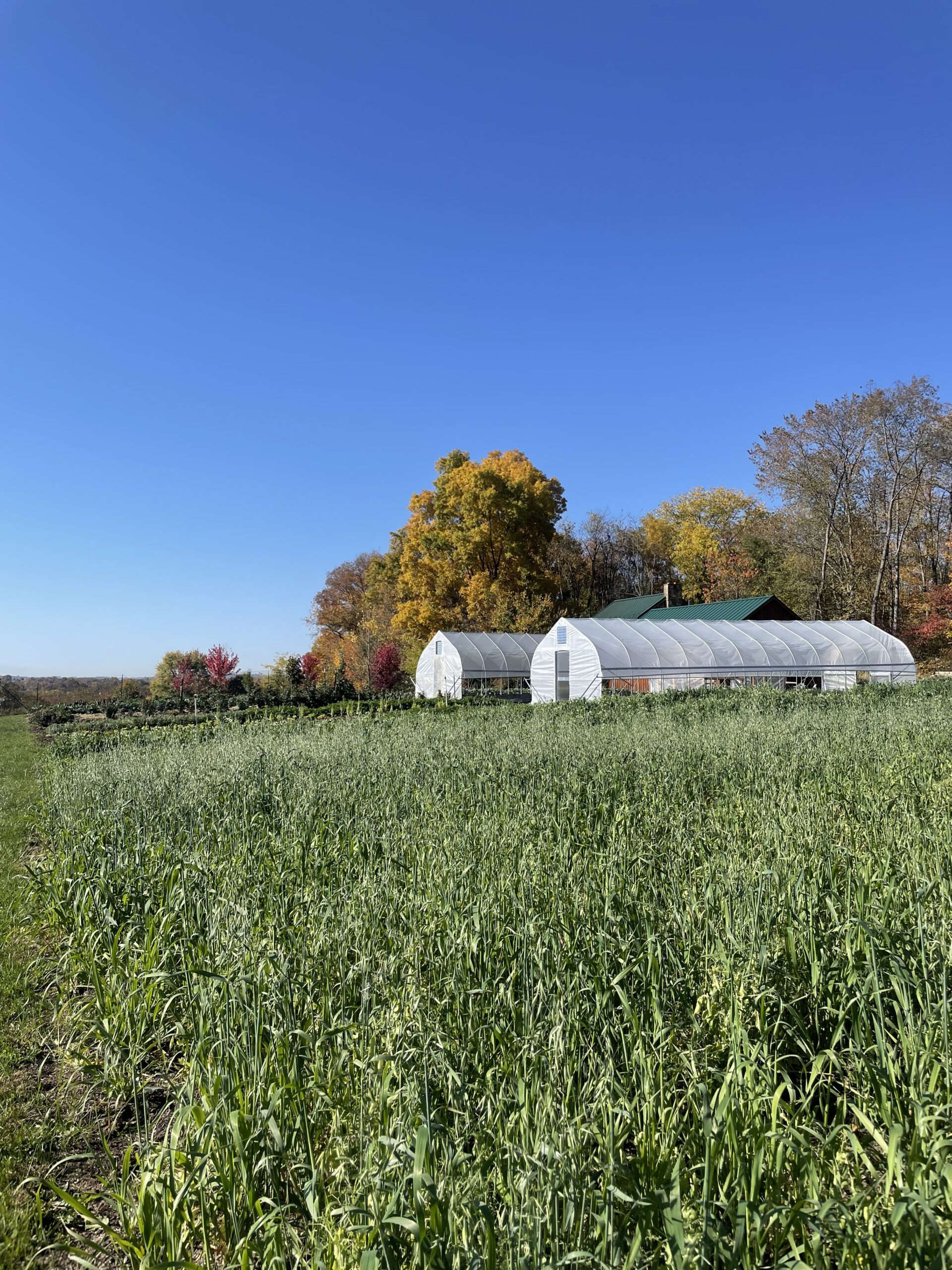
Winter, as they say, is coming. One of the keys to creating the healthiest soil possible is protecting and enhancing it during the harsh winter months. As with most things in the garden, there are many ways to do this (and in our opinion, better and worse methods). Lets discuss the ways we protect our soil ahead of the cold months!
The Gold Standard – Cover Crops
It may not come as a surprise that cover crops are the best way to protect winter garden beds. Not only do they provide the ground cover and mulch that moderates temperature and prevents erosion, they are living plants. Because they are growing, they also do lots of work below the soil surface, making nutrients available, improving soil structure, and providing food and homes for lots of soil microbiology.
We primarily use two types of cover crops at the farm. The first is a winter-killed mix of field peas and oats, which grows through fall and dies in the winter, leaving a thin surface mulch in the spring. The other is winter rye, which actually stays alive and even grows slowly through the winter. We let it grow tall and begin to set seeds before crimping it and covering it with a tarp in May.

Both of these cover crops protect our soil from erosion and enhance the quality of the soil for the next year. Since they need time in the fall to grow, we only end up planting around a third of our garden beds with cover crops. What happens to the rest of our beds?
Mulch – A Strong Alternative
Our next favorite way to protect beds is with a thick layer of natural mulch. We emphasize natural here because a mulch made of organic matter will also feed the soil to a certain degree as it breaks down. Since it sits on the soil surface, it isn’t going to improve soil conditions too far down, but it protects from erosion and moderates soil temperatures very well. We’ve found un-frozen soil beneath 6 inches of hay mulch even after a week of temperatures in the teens!
We love to use hay (grass clippings) as mulch, simply because we have a lot of it on our farm. In reality you can use pretty much any natural material you have. Leaves, natural fibers like wool or hemp, and more will mulch a garden bed well. Depending on the crop, we will either rake off the mulch in the spring and add it to our compost pile, or leave it on and transplant directly into it.

One key to using mulch for winter protection is thickness. You ideally want several inches of mulch over a bed to provide the right benefits. It may seem like a lot when you are applying it, but trust us, the more, the better!
Mulching in Place – a Pragmatic Alternative
What if you’ve got some late-season crops growing in your garden like cabbages or kale? It may be too late to start a cover crop after harvest – but never fear! Some late season crops can be mulched in place, meaning that the leftover residue of the crop you are growing can be itself used as a mulch for your garden beds.
The best way to do this is with some kind of mower that can chop up the crop and leave it on the soil surface. Then, the crop (and roots) break down over winter all while giving the soil some protection. If you don’t have a mower or one powerful enough to chop up the crop, you can simply leave it there or roughly cut it at the base and let it sit on top of the bed.
This method is less ideal than cover crops and mulching, for a couple of reasons. The first is that even bulky crops like cabbage don’t provide nearly the same mulching effect as several inches of intentionally applied mulch. It is more of a thin organic layer that is better then bare soil. The other drawback is that of pests and disease: they key to management of many pests and diseases is ensuring that crop residue is removed and either composted or destroyed, breaking up the life cycle of the pest or disease. Leaving crops on your beds all winter can risk making any pest or disease problems you have worse, or introducing new ones next season. A good crop rotation will help prevent this if possible.
The Silage Tarp – for when all else fails
Its generally not possible for us to cover every single bed in our 2/3 acre garden with organic material. In the cases where it isn’t possible, we cover beds with a black silage tarp. This tarp prevents all light and water from getting through to the beds. It protects very well from erosion, but it has several drawbacks in our opinion.
As rain and snow pound against the tarp, it can compact the soil below, reducing the quality in the spring. It can also cause anaerobic conditions in the soil by excluding air and water flow. Anaerobic conditions can promote fungal and viral disease. The tarp is also plastic, and like all plastic, it sheds microplastics into the environment, which we try to avoid as much as possible.
One thing the tarps do very well is eliminate weeds. When we pull a tarp away in the spring, our beds are squeaky-clean and weed free.
What if You Can’t Protect Your Beds?
If you’re unable to do any of the above, is it all over? Well, of course not! Uncovered beds risk erosion, compaction, and weed development, but soil can always recover from stresses.
For soils you can’t cover in the winter, we recommend planning to have these areas be some of the first to plant out in spring. For example, we usually have a couple of areas that don’t get any cover for winter, and we work these into our crop plan to be some of the earliest plantings of things like snap peas and early carrots. We also avoid heavy feeders like brassicas and squash, as uncovered soil may have lower fertility.
Best of luck to your beds this winter!