If you’ve read about us at all, you know that our farm loves to use mulch of all kinds. Cover crops like hay, straw, and compost are all useful mulches to keep our soil healthy. But none of those come close to our #1 farm mulch, at least on a volume basis. That would be wood chips, ubiquitous in our eastern North American forests!
In today’s post, we’ll discuss how we use wood chips on our farm, how they benefit us, and how you can start using them as well!
How We Use Wood Chips
December, and winter in general, is the time on our farm when we move a lot of wood chips. Like, several tons of them shoveled by hand and moved via garden cart. The amount of wood chips we use yearly is almost definitely more than the amount of compost we use on our garden beds, and we use literal tons of that, too.
Mostly, we use wood chips as a surface mulch for perennial crops. We try to put a “donut” of about 6 inches of wood chips around all of our young trees each year. We also mulch our raspberry patch, as well as our patches of native wildflowers around the farm. Wood chips are also useful for keeping a weed-free barrier around our high tunnels and keeping weed-free space in our seedling nursery.

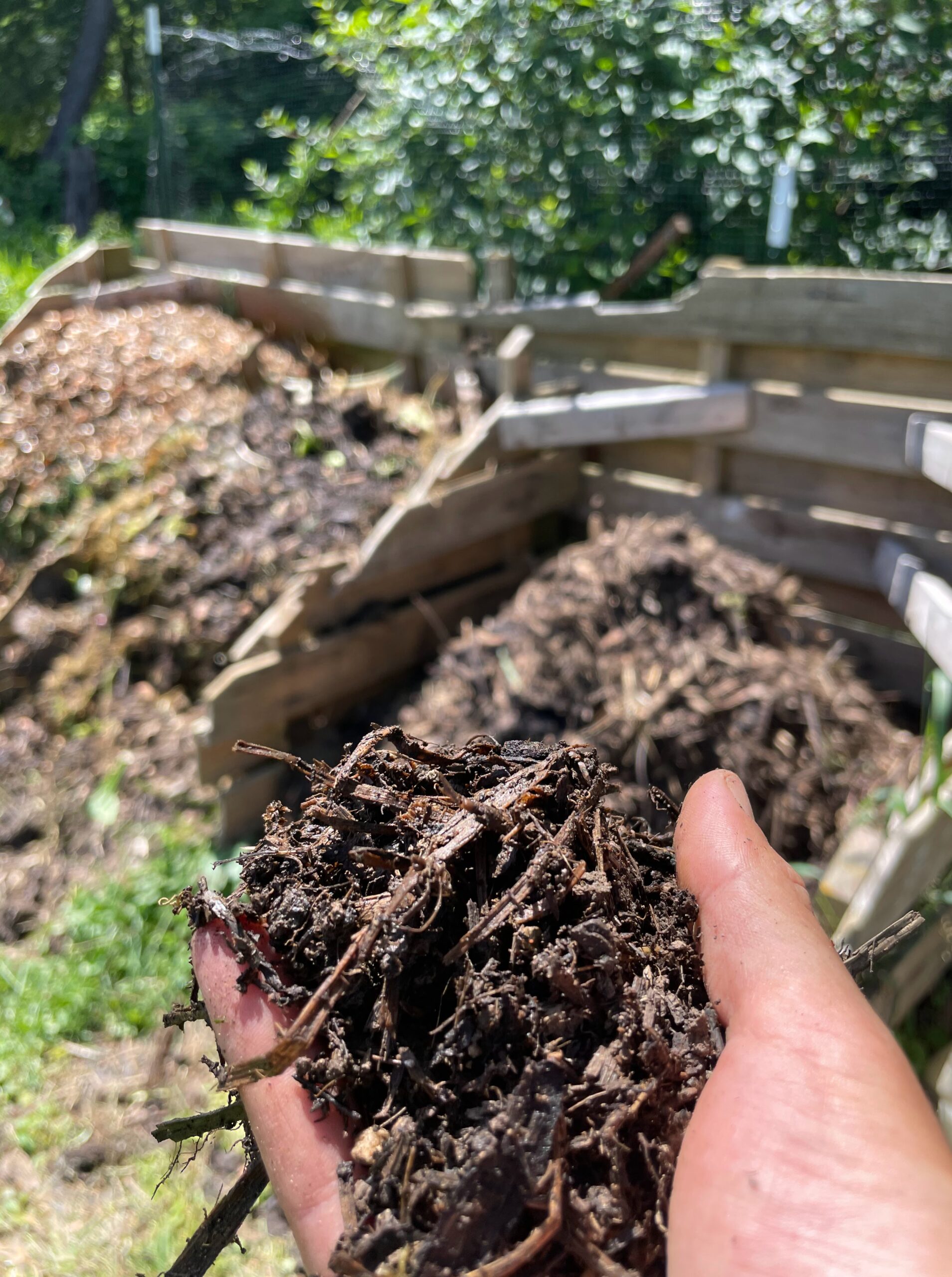
Generally, we don’t worry too much about the condition of the wood chips. We have a couple of arborists who are happy to drop off a few truckloads throughout the year, likely from trees cut from the sides of roads or other folks’ homes. Sometimes they are very uniform chips from thicker tree trunks, mostly the cellulose. Other times they have lots of smaller, unchipped sticks, lots of leaves, etc. As long as we aren’t receiving plastic or other garbage, we don’t mind!
The final use for our woodchips is as a compost ingredient. A good “brown” or high carbon component of compost building, we often add layers of wood chips with fresh grass clippings, garden waste, or food scraps to get a good compost pile going.
Why Use Wood Chips?
You might think hauling all those woodchips around the farm is a lot of work (it is!). However, the benefits of wood chips are many, especially for perennials. Like any mulch, they promote soil health by moderating soil temperatures, retaining moisture, and adding fertility to the soil microbiology as they break down, in turn fertilizing the plants.
Wood chips also have a mulching ability that most other mulches do not have: they promote fungal growth. Most forms of fungi rely on those high-carbon materials like wood to thrive. That’s why you’ll often see mushrooms growing on wood! When you mulch using wood chips, you’re providing an excellent environment for fungal growth in the top layers of the soil.
Why does this matter? Well, as it turns out, different plants have different relationships with soil microbiology. Your typical garden vegetables generally prefer an environment richer in bacteria and protozoa, as these microbes make nutrients available quickly and easily to hungry annual crops.
Most perennials actually prefer a fungal system for their nutrient uptake and grow better in a fungi-rich soil. This makes intuitive sense: the leaf mold and decaying wood on the forest floor is extremely rich in fungi, and trees have evolved to have an excellent symbiotic relationship with these fungi that help break down that material and return it to the soil.
Thus, mulching our trees and woody perennials like raspberries also helps them grow better, in addition to keeping their soil covered. On the flip side, we never mulch our garden beds with wood chips, as the negative side effects generally outweigh the pros (no one likes a wood chip in their lettuce).
How You Can Use Wood Chips
If you live anywhere in the eastern US, you’ll probably have a fairly easy time getting some wood chips. The forest is everywhere, and every day, arborists are clearing trees for one reason or another. Wood chips are considered a waste material for them, so many are happy to avoid paying to dump their chips somewhere and will happily give them to you for free.
Chipdrop is a company many use to coordinate this delivery, though it can be hit or miss depending on the area. You can also contact a local tree service directly and ask if they would be interested in delivering. Beware, though, in both of these instances, you’ll probably receive a full truckload of wood chips, which may be more than you have space for.
Once you have them, my advice is to use them just the way we do! At least 6 inches on any trees, perennials, or shrubs will do the trick. If you typically apply garden mulch, you can use wood chips the same way! Using local wood chips also avoids dye-laden garden center mulch, often trucked in from far away. Switching to wood chips is a more sustainable, economic solution for anyone!