Each year, we make subtle adjustments to the list of crops we grow. We try to make these changes small, measured, and intentional. 1 or 2 crops miss the cut for various reasons, and a couple crops get added to the mix. Sometimes we add a crop that we used to grow but want to grow again, and other times we try a totally new crop that we’ve never grown before.
Celery is the latter, and we are trying to grow a small amount of it for this year’s CSA. We thought we’d do a super straightforward overview of this relatively challenging crop, as we’ve spent some time over this winter studying up on how to grow it!
Why Celery Made The Cut
Most people know celery. It is a staple in lunchboxes, on veggie trays, as a side for wings, in soups and roasts, and elsewhere. Celery can also be a bit of a polarizing vegetable, with some folks absolutely loving it, and some who would prefer it to never be seen on their plate.
We’ve never grown celery, and the reasons why are fairly simple. First and foremost, it simply isn’t a very profitable crop to grow at our scale. Celery is demanding in terms of soil nutrients, pH, and moisture, and it stays in the ground for a really long time. It also doesn’t fetch a high price, as most folks see celery as one of those lower-shelf veggies that are cheap and ubiquitous.
On the flip side, celery is a really versatile vegetable in the kitchen. We’re certain that our CSA members would be grateful to use some fresh local celery during the season.
We also know that most of the celery available to folks in the grocery store cannot even begin to compare to fresh, local, ecologically grown celery. Much of the celery at the store might as well be crunchy water, while fresh celery is absolutely bursting with flavor and aroma. This is one of the crops where the difference is so unbelievably noticeable that it is hard to go back to the grocery store once you’ve tried fresh celery.
Considering these pros and cons, we’ve found a middle ground. We plan to grow celery for the joy of our customers (and let’s be honest, ourselves!). However, we don’t have the space to justify a large planting or successions to extend the seasons. Thus, in 2026 we hope to plant just a single bed of celery for 1-2 harvests, depending on how the crop does.
Growing Celery From Start To Finish
As said above, growing celery is fairly challenging, even for seasoned farmers. It is a member of Apiaceae family, alongside carrots and parsley. These crops require a longer-than-usual germination time (1-2 weeks) at constant 70 degree temperatures. Light is also necessary to germinate celery. We start the celery in late February in soil blocks and hold them in our nursery for 6-8 weeks, as they grow fairly slowly.

Our goal is to plant them out in the field sometime in April, hopefully avoiding a hard freeze. Some light frost is ok for celery, but long periods of cold can cause it to bolt or produce very tiny stalks.
Once out in the field, celery is notorious for its heavy need for food and water. The soil should be really rich in organic matter and fertilized well, so we add a good amount of compost and alfalfa meal before planting. Celery also requires really consistent water and excellent drainage. Inconsistent water will also cause poor stalk growth, and like most vegetables, celery does not like waterlogged soil. Striking that moisture balance can be challenging!
Celery also does not compete well with weeds, so keeping a weed-free bed is very important. Celery will take a long time to grow (we’re thinking 3 months from transplanting to harvest), so it ideally will be grown with other long season crops.
You can harvest any time when the celery stalks are big enough, either chopping the whole plant off at the base or breaking off individual stalks. The latter method can extend the harvest season.
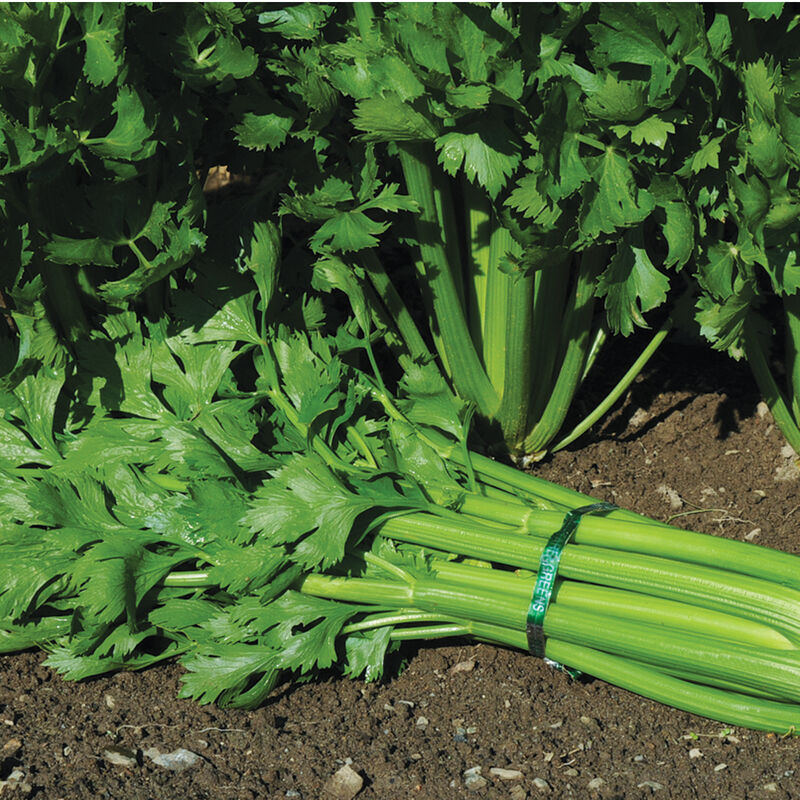
All parts of the celery plant are edible, and we usually recommend using the stalks the same way you usually would, and using the leafy tops as a fresh herb in salads, in pesto, chimichurri, or garnish. Basically, any way you would use parsley, you can use the celery greens.
We’re planning for a mid-summer harvest, but you can also harvest celery in the fall, or earlier in summer if growing indoors.
That’s all for celery. As with anything in farming, nothing is certain, but we hope to have success with this crop in 2026!