
In my former life as an engineer, I spent a lot of time thinking about waste. Often, one of my main goals was finding waste and coming up with solutions that would minimize or eliminate that waste. In the engineering world, waste was usually measured in wasted time, wasted processing, wasted effort, and wasted money. Occasionally, it was about actual, physical stuff, but usually not.
As I’ve grown more environmentally conscious (and started farming full time), I’ve started thinking more and more about the literal kind of waste: the stuff or junk or scrap or whatever sitting there taking up space after you’ve done something. As it turns out, this is a great way to ruin the vibe, as the kids say.
No matter where you look, if you follow the waste, you end up with either a landfill or an ocean filled with mostly plastic, and mostly things that surely could have been recycled or made with something more natural. It certainly seems as if humanity is pumping up a huge fountain of petroleum and evenly dispersing it across the earth!
Surely there’s another way? For example, we know that humans only started using oil to make plastic products in the last couple hundred years or so. Was there waste before that?
Before this gets too philosophical, let’s get into some of the ways I think about waste as it relates to our farm business and our homestead. Spoiler alert: there’s probably still some waste.
It All Starts With Materials
A concept always running through my mind as I think about the farm is the materials needed to make the farm run. While a farm is built to create food out of soil, water, and sunlight, it does actually take quite a bit more to turn that into a sustainable business. We obviously need our infrastructure, like our tunnels, wash/pack area, cooler, and our tools. There are also quite a few “consumables” or things that are used up and need to be replenished.
This includes obvious things like packaging for food and field covers and landscape fabric, but also less obvious things like compost, fertilizer, seed starting mix, and seeds themselves. Consumables are a good place to zero in on when it comes to waste!
I try to think deeply about each of our consumables and their impact on the environment. First (and maybe most obvious) is trying to use as little plastic as possible. While things like row cover and landscape fabric can certainly help a farm business run, their lifespan is short, and they are made of plastic. So, we use row cover in an extremely limited way and don’t use landscape fabric at all.
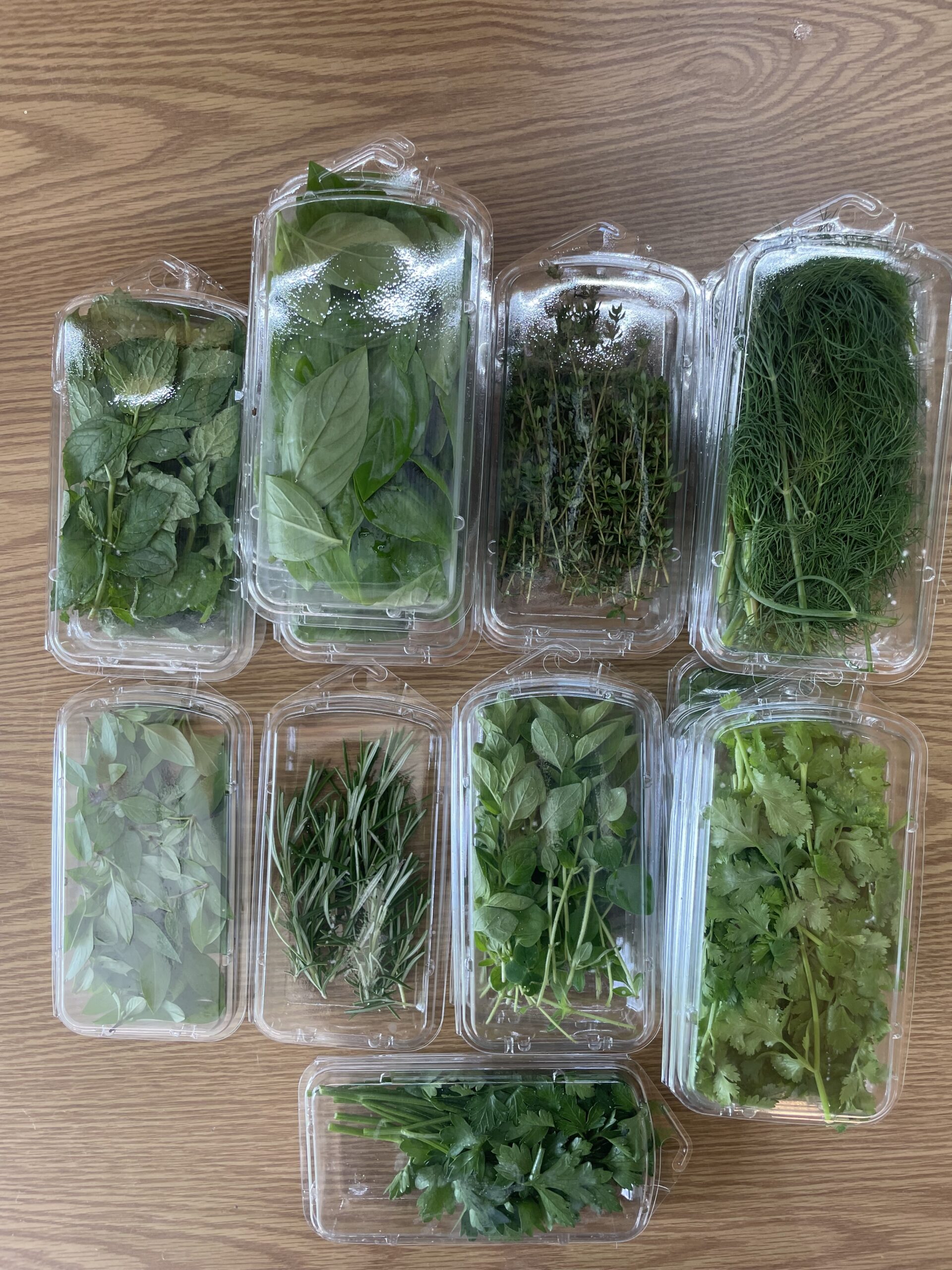
As far as packaging goes, we are plastic-free other than bags for tender greens. We’ve yet to find a sustainable way to pack tender greens that will maintain the quality we require to set our produce apart from what’s at the store, unfortunately.
I also think about how those consumables get here and who provides them. Shipping heavy things like compost around uses a lot of fuel/energy, and buying things from large, polluting companies helps contribute to that environmental damage.
In the ideal case, all of our consumables come from our farm, and the ones that don’t are sourced as close to home as possible and use as little plastic as possible. We’re not there as a farm, and may never be, but taking steps to move in that direction all the time is what really matters!
The Value Of Repair
As I’ve grown (and to some extent as my bank balance has shrunk!) I’ve come to realize how pervasive our throw-away culture is. It seems like nearly everything earns a one-way ticket to the landfill the moment something goes amiss with it.
A kitchen appliance on the fritz has only one solution – it must be totally replaced. Many modern products are also made so cheaply that they are expected and intended to break and need replacement (see: planned obsolescence). People who know how to repair things are also in shorter and shorter supply, further increasing the cycle of waste.
This throw-away society has a huge negative impact on the environment. As I think about waste in this way, there are two good solutions. The first is that I try to think more carefully about the quality of a purchase. Finding things that are purposefully built to last and/or be repaired is challenging, but possible.

For example, my walking tractor is made by a company called BCS. It’s built in a way that makes it very simple and easy to perform maintenance on and repair. It is built entirely from mechanical parts that can be assembled, disassembled, and replaced. The engine is also a very standard Honda engine, which is incredibly reliable and easy to find parts for if a repair is needed. My BCS may have been fairly expensive up front, but I have little doubt that it is the only walking tractor I will ever need, and may never even end up in a landfill!
Another strategy is simply making the effort to repair things rather than replace them! This strategy is quite enjoyable from an engineer’s perspective, as a broken item becomes a problem to be solved, rather than a purchase to be made. It also saves a ton of money to repair something rather than replace it.
Repair is easier said than done – I’m still nowhere close to capable of repairing complex electrical parts or computers, for example. Each time I do successfully repair something, though, it brings great joy to have solved the problem and to have avoided some waste.

There May Always Be Waste
The idyllic farmer and homesteader’s dream is one where nothing is ever brought in. The bounty of the soil, water, and sun combine to produce everything we need – after all, this is the way humans lived for millennia.
I don’t know if that will ever be true in our times, but I am certain that we can do more to minimize our waste, rely less on fossil fuels and plastic, and keep ahold of the things we have for longer! On that note, I have a food processor that needs a little TLC.