We started a farm for, among other things, fresh produce. A cherry tomato straight from the vine or baby greens harvested and cooled quickly are marvelous compared to what can be found at the grocery store, both for us and our customers.
However, one of those other reasons to start a farm is to eat well. Part of eating well is doing so all year – us humans don’t take the winter off from eating. Even more than that, we don’t really prefer eating only winter hardy greens like spinach from November through April.
As we thought about ways that both us and our customers can eat well year-round, one thing became obvious: we need to be able to store our produce. Having a relatively high diversity of fresh produce from our tunnels supplemented with various storage crops makes the difference between 4 months of salads and a vibrant winter diet.
This season we put some serious effort into planning for and growing storage crops. Here’s a bit about how we’re managing that and how its going so far!
Step 1: Find a Place to Store Them
Most produce falls into one of 4 categories when it comes to preferred storage conditions: cold and wet, cold and dry, cool and wet, and cool and dry. Our walk-in cooler is a perfect cold/wet environment, where we keep temperatures around 34 and humidity stays around 90%. Cold/wet is also what nearly all root vegetables and leafy vegetables like cabbage prefer. Another plus is that our cold room is big enough that we have plenty of available space in the winter months, when we would otherwise be storing relatively small amounts of greens week-to-week.

We also have been using our basement, which is well within the “cool and dry” range, to store things like squash, sweet potatoes, garlic, and onions. In reality, onions and garlic really prefer cold and dry conditions, but low humidity is more important for storage if we had to choose one, and we’ve gotten pretty good storage so far storing those crops there.

These two spaces give us exactly what we need to grow a wide variety of storage crops: enough of a variety of temperature/humidity conditions and enough space to store relatively large amounts.
Step 2: Choose and Grow the Crops
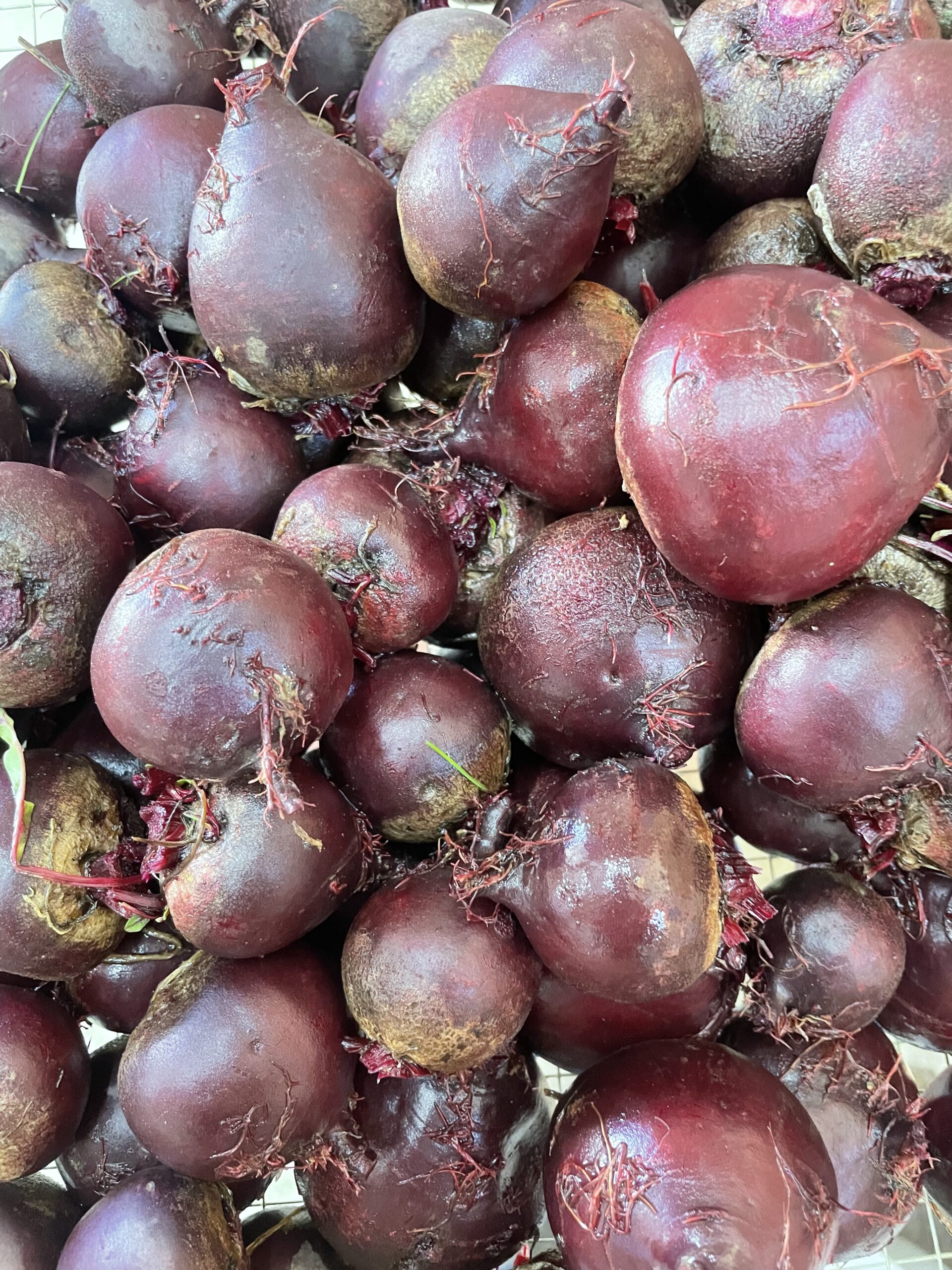
Given our storage situation, we made a list of crops we wanted to grow specifically for storage this season: garlic, onions, butternut squash, cabbage, beets, carrots, kohlrabi, and turnips. This is enough variety for us to have a good storage mix for customers, but not so much as to overwhelm us in our first season growing and harvesting them.
For each crop, we had to answer two questions in order to complete our plan: 1. when must each crop be harvested? and 2. how long will each crop take to grow? For crops like cabbage and carrots that don’t mind a frost (and even will have improved flavor after a light frost or two), the crop plan just has us work back from our average first frost date and using the crops days to maturity (DTM). We add several days to this expected DTM to account for the shrinking sunlight and slower growth as fall comes on.
This also dictates harvest timing. We have to make sure that we have time to harvest crops like winter squash before a frost, and time to harvest crops like carrots before we get any hard freezes. Also, we have to make sure that we will have room in our storage space and the right storage bins to actually put everything away.
Our Results
Overall our storage crops did very well, with a couple of them being some of the best harvests we’ve ever had! In particular our butternut squash and carrots brought in huge harvests compared to what we planned for, which gives us a lot more flexibility for our Fall CSA.

Another thing we’ve noticed is that the timing of harvests fits in very well (mostly). The majority of crops are harvested in October, just after our farmer’s market ends and our planting/transplanting/bed prep work slows down significantly. It is also when our cold room begins to empty out a bit instead of being filled each week for our market. The exception to this is onions, which have to be harvested and cured in July, which is already extremely busy.
We will certainly have to dial in our crop plan for next year to have more even harvests of each crop. One thing that was challenging this year is that we didn’t have much of an idea what a typical harvest should look like, because some of our varieties were different and we generally bunch things like carrots and beets, and we don’t have previous data on how much weight we harvest.
We are also looking to add a bit more variety for next year. Watermelon radish, parsnips, more onion varieties, and more are on our list, and it will just be a matter of looking at our growing space and seeing what we can do!
Storage crops have made it possible for us to run a small Fall CSA through mid-December. With more crops and planning, we think we could also extend our CSA into the winter, and become a true four-season farm.
We’ll be checking back in as things, well, store. We are interested to see how long our crops will store before they spoil, how their flavor changes as time goes on, etc. We’re excited for fall and winter!