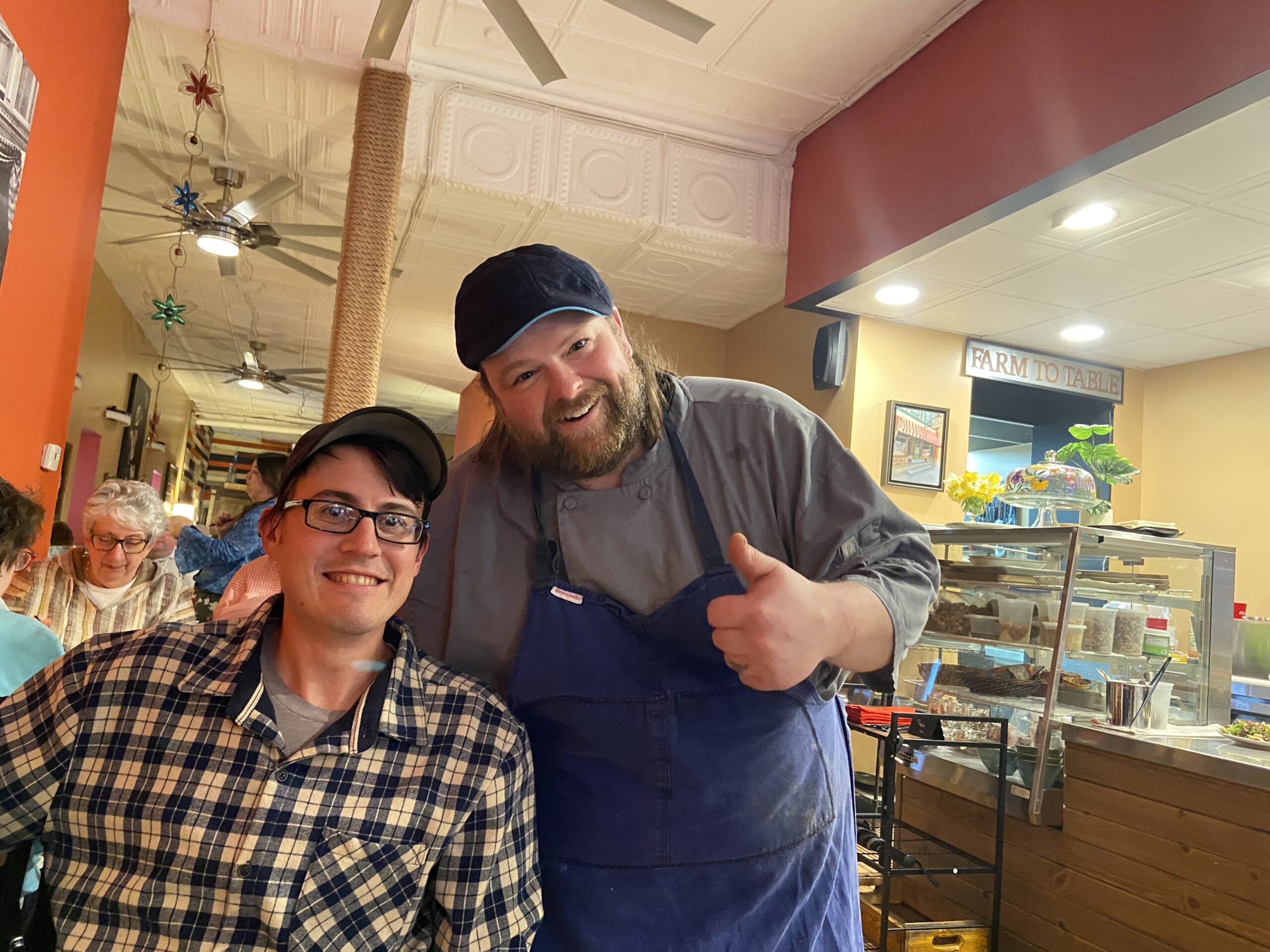
This past week, my in-laws were in town, and we had plans to go out to a local restaurant for dinner. I had been hyping up the restaurant to them for some time, saying things like “this is BY FAR the best restaurant in our area.” The spot is known for excellent food featuring locally sourced gourmet ingredients. We booked reservations for 5 PM, brought a bottle of red wine to share, and our experience did not disappoint! The chef even brought a complimentary salad right to our table, mentioning that the salad greens came from a local farmer.
You’ve probably guessed that the local farm is Good Dirt Farm, and the local farmer is me! The restaurant, Mailey’s Provisions in Latrobe, truly is a diamond in the rough in our area. Only 5 minutes from our farm, it was our very first restaurant customer. Working with Mailey’s helped us learn and grow alongside another small business. This season, we are working with 3 (maybe more!) local chefs. Selling to chefs and restaurants is quite different than the farmer’s market or CSA, but it’s a crucial aspect of our farm and business!

It’s All About The Relationship
In my previous career doing sales engineering, one concept stood above everything else: creating strong ties between businesses is really about creating strong relationships between people. Now, as a small market garden selling to generally small restaurants, the relationships are not nearly as complex, but the same concept applies. Selling to restaurants is first and foremost about fostering an excellent relationship with the chefs who purchase your food.
Even though I have previous experience building relationships with customers, working with chefs has been a learning experience. The first challenge was learning more about what chefs do and what their day-to-day is like.
Having no previous experience working in a kitchen or food service, I had much to learn. The first thing you notice is that chefs are busy. Not busy in the same way a farmer is, but a very high-intensity, incredibly fast-paced business day in and day out. Chefs simply need to lock in and focus on preparing food during peak hours, having absolutely no time for planning, exploring, or even chatting.
Understanding this intensity helps a lot when it comes to working with them as a farmer. I always make sure to deliver during the least busy part of their day. That’s when they have time to receive the food, give me feedback on how things are going, and just chit-chat. I find my weekly check-ins with my chefs are really positive for improving how I can serve them.
I’ve also learned that packaging and presentation really matter for chefs. At the farmer’s market, bunching carrots and having a bit of dirt at the base of a head of romaine is fine. Chefs value produce that is as ready to go as possible. After all, washing greens or cutting the tops off carrots is precious time lost. Some of my chefs also prefer specific sizes of packaging that match their storage space and procedures.
In short, each of your restaurants is going to have a slightly different relationship and setup, and that’s a good thing! Tailoring your service to what a chef wants will ultimately result in trust and convenience, two things that can be hard to find for a chef.

A couple of constants across all restaurant customers come to mind: consistency and quality. I generally save my very, very best vegetables for my restaurant customers. Perfectly sized, uniform carrots vs a bunch of forked carrots of random size will make a huge difference.
Consistency may be the most important aspect of all. My chefs know that they’ll hear from me about produce availability at the same time every week, that I deliver at the same time every week, and that I do my very best to keep important staples available each week. In fact, some of my chefs simply copy and paste their orders week to week.
Restaurants As Part Of Our Farm Plan
While we are still focused on our CSA and farmer’s markets, working with chefs and restaurants is incredibly important to our farm business. In 2025, restaurants accounted for a little over 10% of our sales. We expect that share to grow a bit in 2026. There’s many reasons that we feel strongly about working with chefs and restaurants.
Firstly, these customers form a very solid and reliable sales base. It’s easier to make a crop plan if we know certain crops will be ordered in bulk each and every week. For things like lettuce, tomatoes, peppers, carrots, and storage crops, having this consistency is important.
On the flip side, chefs and restaurants love to absorb a bumper crop that we can’t sell enough of. Lots of leftover cabbage? We’ll have chefs take the opportunity to add slaw as a special for a few weeks.
Restaurants also greatly help raise awareness and brand recognition for our farm. At Mailey’s in Latrobe, the owners constantly need resupply of our business cards that they hand out to happy customers. We’ve gotten quite a few folks sign up for our CSA after having a delicious meal at one of the restaurants we work with.
We believe a resilient farm business should have a diverse set of sales outlets. It’s unlikely that we will ever make restaurants our sole customers, as we love the magic of creating a CSA too much. But restaurants have become an important part of our equation. And there’s something uniquely magical about enjoying a salad that you grew, taken up a note to culinary delight thanks to the skill of a chef.
Restaurants and farm businesses are a match made in heaven, and our world needs more of them!